

Parent Categories




Related Products



Related Books


The Story Behind John Keats’s Nameless Headstone: The Poet with No Name on His Grave
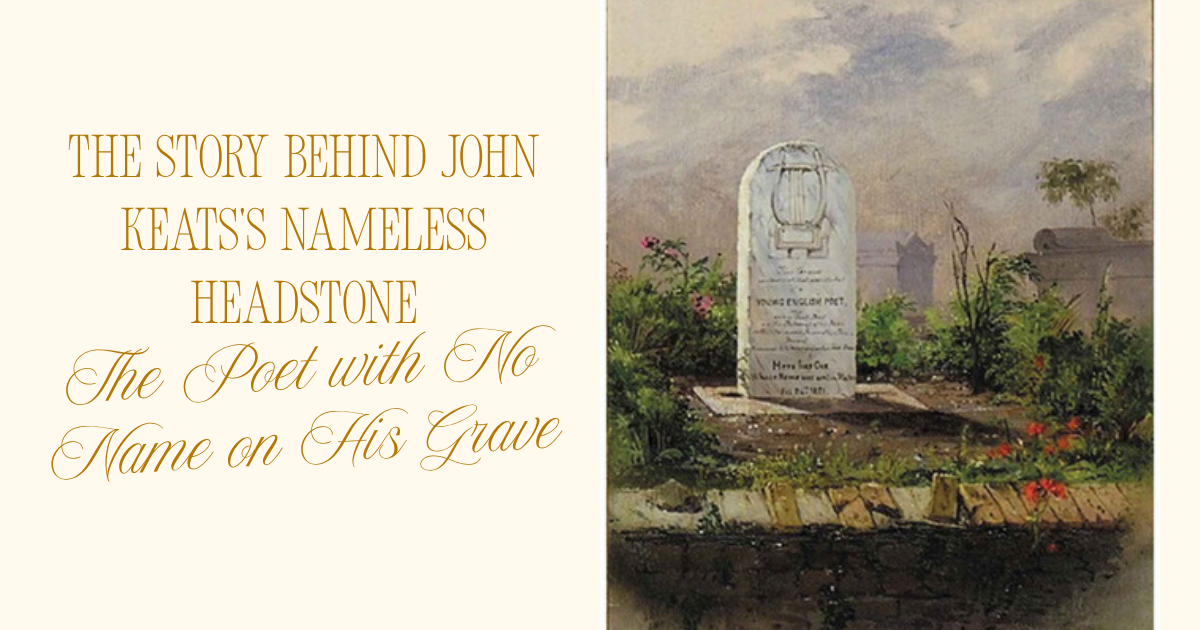 John Keats’s Nameless Headstone
There is something haunting about a poet whose words have survived for centuries but whose grave refuses to speak his name. In Rome, beneath the quiet shade of the Non-Catholic Cemetery, stands the grave of John Keats, one of the greatest poets of the English Romantic movement. Yet his headstone bears neither his name nor a conventional tribute to his literary genius. Instead, it carries a line that sounds almost like an epitaph for a forgotten man: “Here lies One Whose Name was writ in Water”.
For a poet who gave English literature some of its most enduring lines, the inscription is startling. Why would a young man of extraordinary talent choose, or appear to choose, anonymity in death? Was it an expression of despair, a rejection of literary fame, or a final protest against the world that had misunderstood him? The story behind Keats’s nameless headstone is as moving as the poetry that made him immortal.
Also read: What Does Not Kill Me: What Friedrich Nietzsche Actually Meant
A Poet Who Died Believing He Had Failed
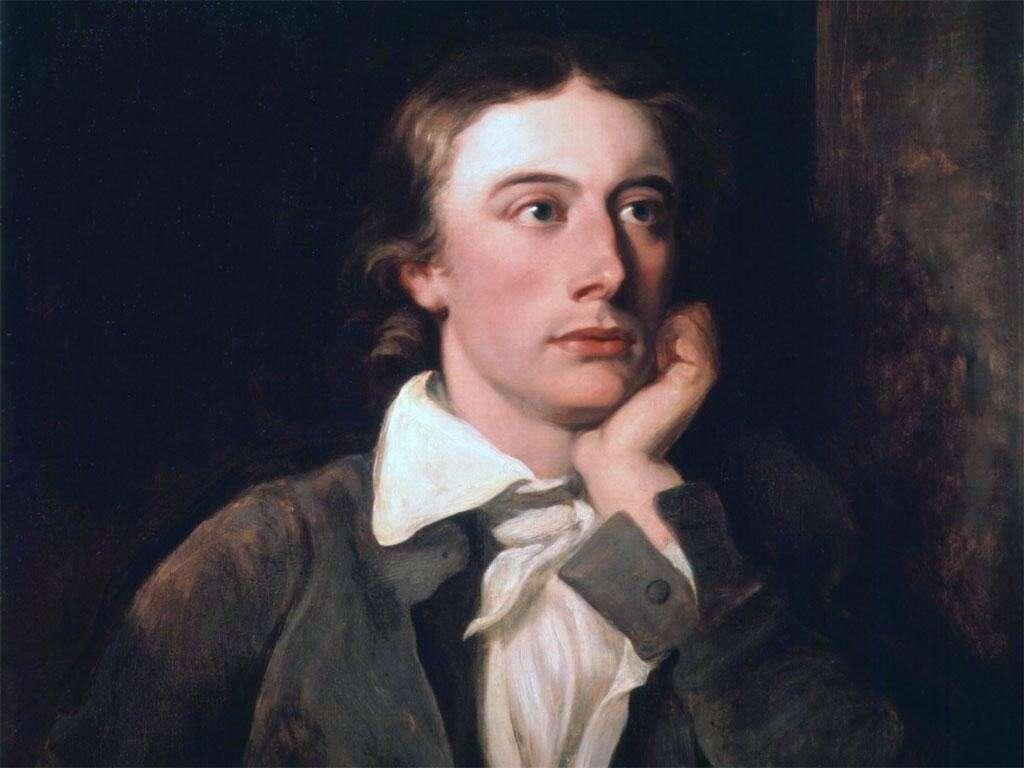 [Image Credit: Biografia]
John Keats was born in London in 1795 and died in Rome on 23 February 1821, aged just 25. In that short life, he produced poems that would eventually become cornerstones of English literature, including ‘Ode to a Nightingale’, ‘Ode on a Grecian Urn’ and ‘To Autumn’. Today, his name is inseparable from the Romantic imagination, with its fascination for beauty, mortality, nature, and the fleeting nature of human experience.
But Keats did not live to witness his eventual reputation. His poetry received mixed reviews, and some critics treated him harshly. His association with the radical poet, Leigh Hunt, also made him a target of hostile literary commentary. The attacks were especially painful because Keats was acutely sensitive to criticism and deeply ambitious about his art.
His personal life offered little consolation. He had fallen in love with Fanny Brawne, but his precarious finances and declining health made marriage seem impossible. Keats had trained in medicine before committing himself to poetry, and he was familiar with illness and suffering. When his brother, Tom, died of tuberculosis in 1818, Keats nursed him through his final days. Soon afterwards, Keats began experiencing symptoms of the disease that would ultimately kill him.
By 1820, his health had deteriorated severely. On medical advice, he travelled to Italy in the hope that the warmer climate might help him recover. His close friend, the artist Joseph Severn, accompanied him on the journey. But Rome offered no cure. Keats spent his final months far from England, separated from Fanny Brawne and increasingly aware that he was dying.
In his letters, he expressed anguish at the thought of leaving little behind him. His sense of artistic failure would become central to the story of his grave.
“Writ in Water”: The Meaning Behind the Epitaph
 [Image credit: www.visitlazio.com]
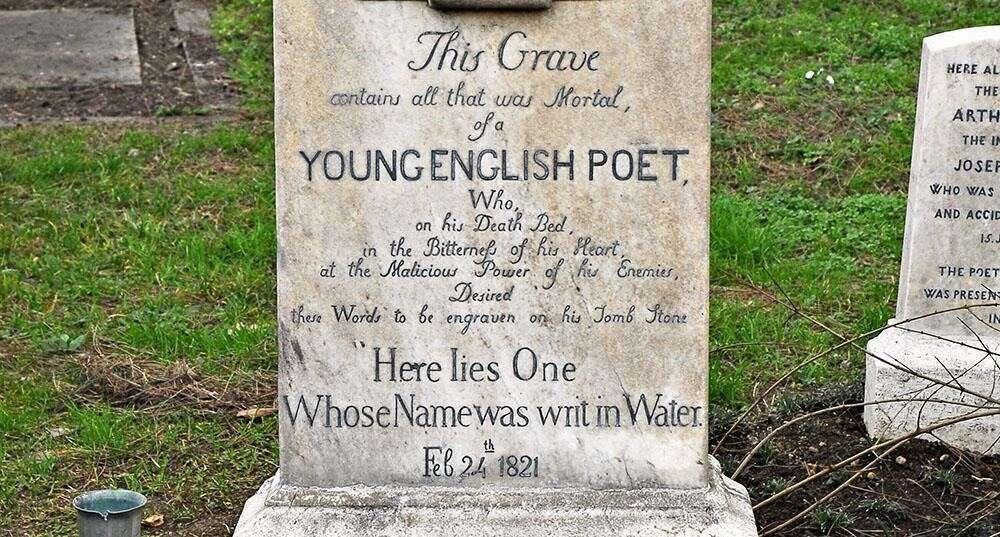
Keats’s request, recorded by Severn in a letter written during the poet’s final illness, was to have the words “Here lies One Whose Name was writ in Water” engraved on his grave. The image is deceptively simple. Write a name in water, and it disappears almost as soon as it is formed. Nothing remains to prove that it was ever there.
For Keats, the line expressed a fear that his literary achievements would vanish, leaving no lasting mark on the world. It was a devastating thought for someone who had devoted his life to poetry. The phrase also had literary antecedents: a similar image appears in the seventeenth-century play, Philaster, by Francis Beaumont and John Fletcher, where good deeds are contrasted with words written in water.
Yet there is a striking irony in Keats’s choice. The very words intended to express his insignificance became among the most memorable lines associated with him. His epitaph, rather than erasing his identity, helped secure his place in literary history.
The headstone itself adds another layer to the mystery. Above the famous line is a longer inscription explaining that the grave contains the remains of a young English poet who, on his deathbed, requested those words in the bitterness of his heart at the malicious power of his enemies. The wording reflects the anger and grief felt by those who survived him, particularly Severn and his friend, Charles Armitage Brown.
There is, however, an important distinction between Keats’s actual request and the story that grew around it. Although Severn recorded the poet’s wish for the water inscription, historians have questioned whether Keats explicitly demanded that his name be omitted. The decision to leave his name off the stone appears to have been shaped, at least in part, by his friends after his death. The familiar account of the nameless grave is therefore not quite as straightforward as it first seems.
A Grave That Became More Famous Than Its Inscription Intended
 [Image credit: www.lostinfood.it]
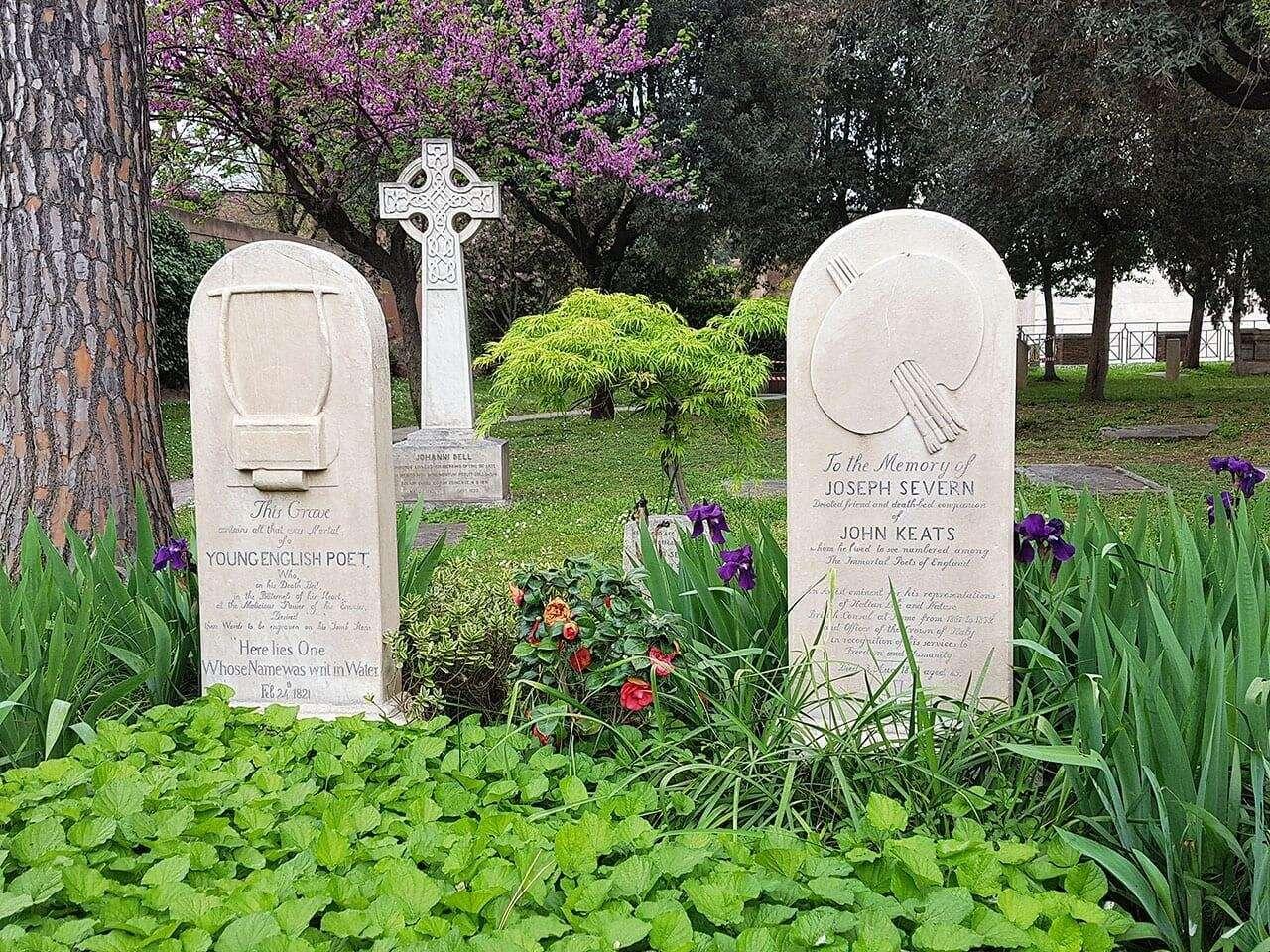
Keats was buried in Rome’s Non-Catholic Cemetery, a place of quiet beauty that became his final resting place far from England. His friend, Severn, arranged for the grave marker to be erected in 1823, two years after the poet’s death. A sculpted Greek lyre with broken strings accompanied the inscription, symbolising a poetic talent cut short before it could reach its full maturity.
The grave became a place of literary pilgrimage. Visitors came to pay their respects to the poet whose life had ended so prematurely, while his reputation steadily grew. Percy Bysshe Shelley, Keats’s fellow Romantic poet and admirer, had already mourned him in ‘Adonais’, his elegy for Keats, published in 1821. Over time, the literary world came to recognise the extraordinary achievement of the young poet whom some of his contemporaries had dismissed.
Keats’s story also complicates the idea that fame is a simple reward for talent. He never saw the full flowering of his reputation. He never knew that his odes would be studied by generations of readers, that his letters would become essential reading for those interested in the creative mind, or that his name would draw admirers to a cemetery in Rome nearly two centuries after his death.
The man who feared being forgotten became unforgettable.
The Poet Whose Name Was Never Really Lost
Perhaps the most moving aspect of Keats’s headstone is the contradiction at its heart. The inscription speaks of disappearance, but the grave has become a monument to endurance. Its anonymity invites curiosity, and its melancholy words encourage visitors to discover the person behind them.
Keats’s poetry, meanwhile, offers a more enduring answer to his fear. In ‘Ode on a Grecian Urn’, he contemplated the strange permanence of art against the transience of human life. In ‘To Autumn’, he captured a season poised between abundance and decline. And in ‘Ode to a Nightingale’, he explored the longing to escape mortality through beauty and imagination.
These poems continue to resonate because Keats understood that beauty does not have to last forever to be meaningful. Perhaps the same can be said of a human life.
His headstone may not announce his name, but his words have ensured that it will never be forgotten. The water has long since settled, yet the name remains.
Your next read: Pinned to the Wall: P.G. Wodehouse’s Clothesline Method of Writing