

Parent Categories



Related Products



Related Books

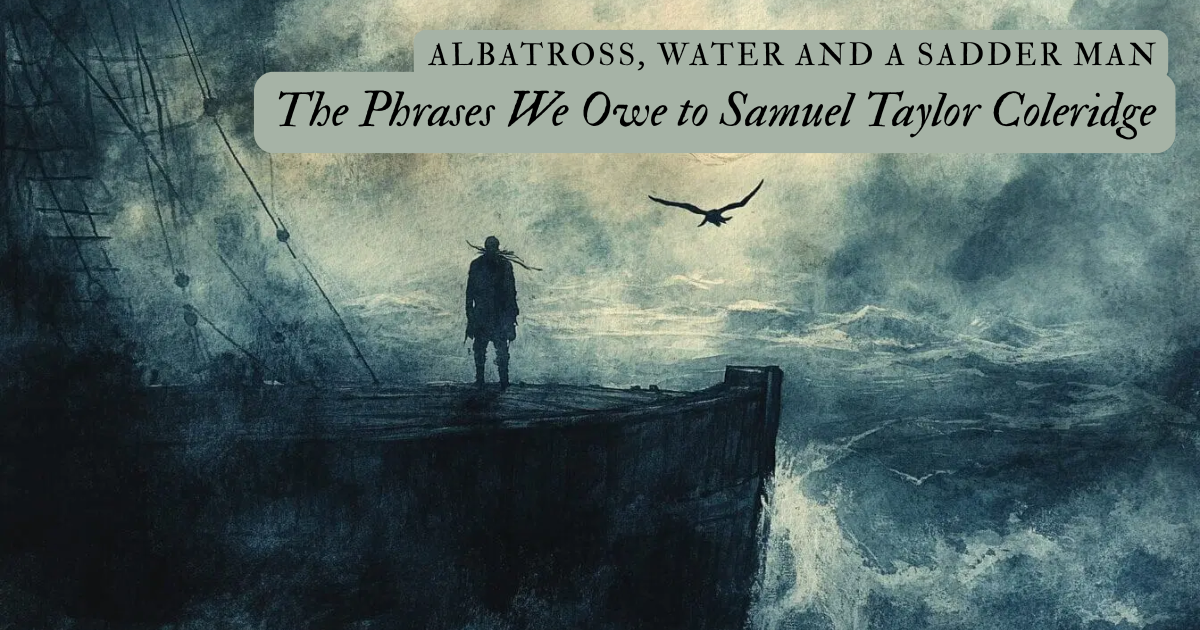
Albatross, Water and a Sadder Man: The Phrases We Owe to Samuel Taylor Coleridge
 Samuel Taylor Coleridge
Some phrases travel so far from their original homes that we forget they ever belonged to a poem. We speak of having an albatross around our neck, complain about water, water everywhere, nor any drop to drink, or describe someone as a sadder and wiser man. These expressions feel like ordinary English, ready for everyday conversation, newspaper headlines and even office banter. Yet they share an extraordinary literary ancestor: Samuel Taylor Coleridge’s The Rime of the Ancient Mariner.
Published in 1798 as part of Lyrical Ballads, the landmark collection Coleridge produced with William Wordsworth, the poem tells the haunting story of a sailor who kills an albatross and suffers terrible consequences. His tale unfolds through supernatural punishment, thirst, guilt and an encounter with the mysterious forces of nature. It is a story of adventure and horror, but also a meditation on humanity’s relationship with the natural world.
More than two centuries later, Coleridge’s language continues to shape the way we describe our own experiences. The remarkable thing is that we do not need to remember the poem to recognise its phrases. They have slipped into everyday speech, carrying fragments of the Mariner’s extraordinary voyage into ordinary life.
Also read: Beyond the Windmills: The Many Meanings of Miguel de Cervantes’ Don Quixote
1. The Albatross Around Our Neck
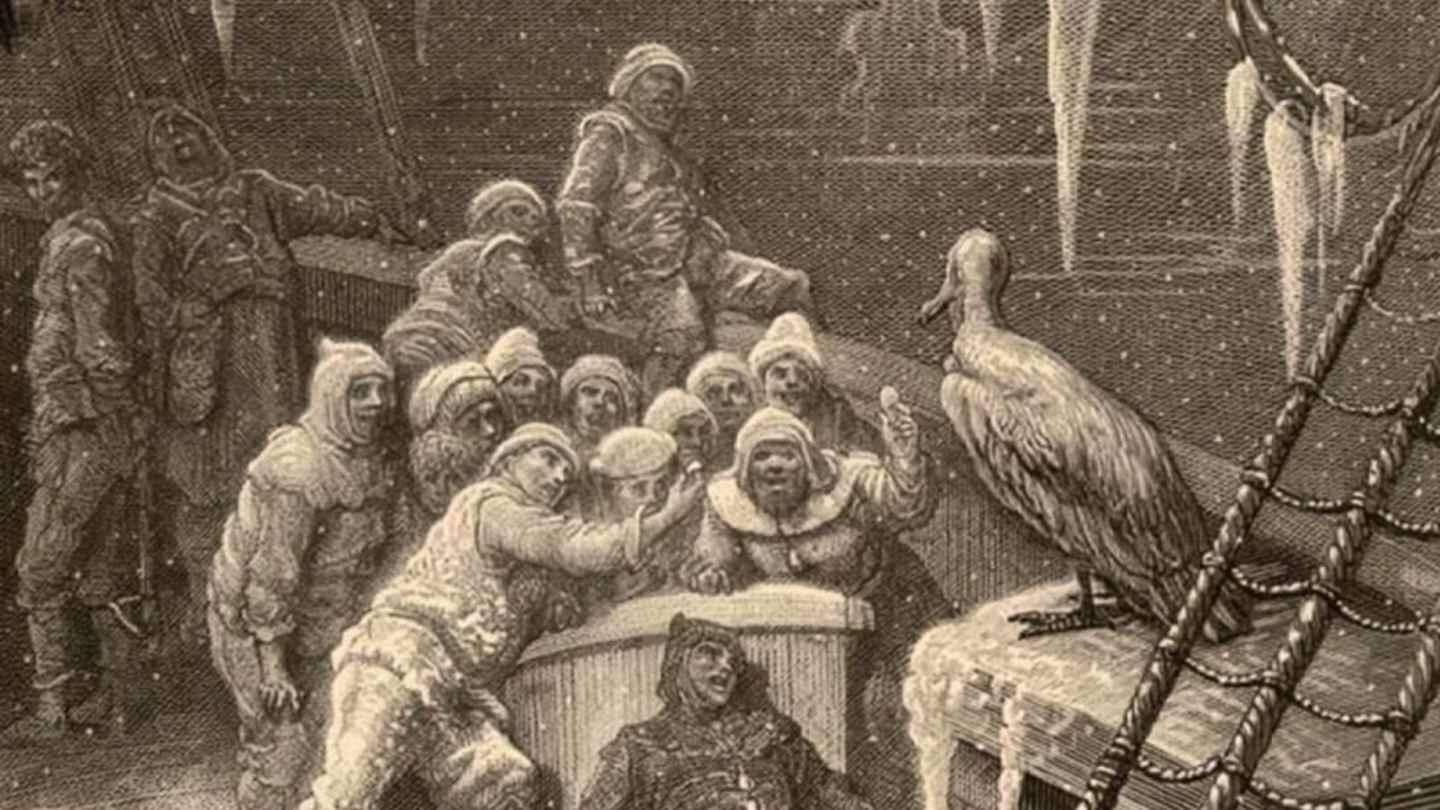 [Image credit: www.mentalfloss.com]
Few literary images have travelled as successfully into everyday English as the albatross. Today, to have an albatross around one’s neck is to carry a persistent burden: a mistake, a responsibility, a scandal or a problem that refuses to disappear.
In Coleridge’s poem, however, the expression begins with a literal bird. An albatross appears alongside a ship trapped in Antarctic ice, and the sailors welcome it as a sign of hope. The bird seems to bring good fortune, accompanying the vessel as it escapes the frozen landscape. Then, for reasons the poem never satisfactorily explains, the Ancient Mariner shoots it with his crossbow.
The consequences are disastrous. The ship becomes stranded in a lifeless ocean, the crew suffers unbearable thirst, and the other sailors eventually hang the dead albatross around the Mariner’s neck as a visible reminder of his crime.
The image is unforgettable because it transforms guilt into something physical. The Mariner cannot simply regret what he has done and move on. His wrongdoing becomes a weight he must carry.
In modern usage, the phrase has lost much of its supernatural horror, but its emotional force remains. A failed project might become a company's albatross; a political scandal might haunt a public figure for years. The expression reminds us that some mistakes outlive the moment in which they were made.
Coleridge gave us more than a memorable symbol. He gave us a way of talking about the past when it refuses to stay in the past.
2. Water, Water Everywhere, Nor Any Drop to Drink
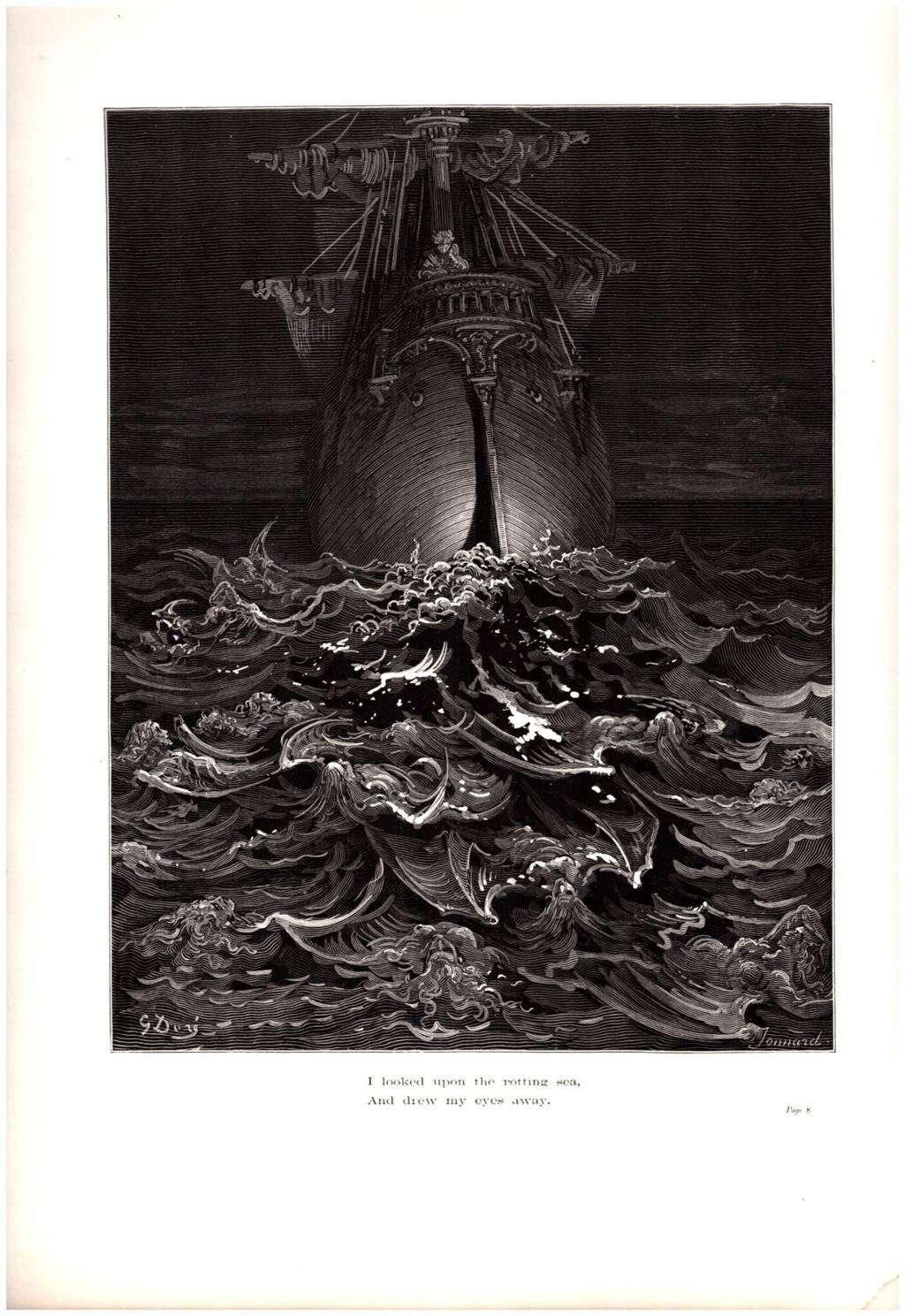 [Image credit: www.parigibooks.com]
Few lines capture the frustration of having something all around you yet being unable to benefit from it quite so perfectly:
Water, water, every where,
Nor any drop to drink.
The Mariner and his crew are surrounded by seawater, but their thirst cannot be quenched. The ship has become trapped in a deadly calm, the sun beats down mercilessly, and the ocean offers no relief. The repetition of water makes the situation almost unbearable: abundance becomes a cruel reminder of deprivation.
Today, the expression describes situations in which resources are plentiful but the thing we actually need remains out of reach. We might have hundreds of unread books but no time to read, endless information but no reliable answers, or countless opportunities but no obvious way forward.
The phrase has also acquired a particular resonance in conversations about water scarcity and the natural environment. An ocean can appear limitless, but seawater is not directly drinkable. Coleridge's image reminds us that the mere presence of a resource does not guarantee access to it.
What makes the lines so enduring is their simplicity. Coleridge does not explain the irony; he lets us feel it. The words have become a shorthand for frustration, but their original setting gives them a far darker meaning: the difference between survival and death.
3. A Sadder and Wiser Man
 [Image credit: www.margot-quotes.livejournal.com]
The poem's most moving transformation occurs not on the ship but after the voyage, when the Mariner's story finally reaches its listener.
Having survived extraordinary suffering, the sailor returns to the world, but he is not free. He is compelled to wander from place to place, telling his tale to particular people as a form of penance. One of those people is a wedding guest, whom the Mariner stops just as he is about to attend a celebration.
Initially irritated by the interruption, the guest listens to the sailor's extraordinary account. When the story ends, he walks away changed. Coleridge concludes:
A sadder and a wiser man,
He rose the morrow morn.
The phrase has become a wonderfully economical way of describing an experience that leaves someone more knowledgeable but less innocent. It might follow a painful breakup, a professional disappointment, a failed friendship or the realisation that the world is more complicated than we once believed.
Yet the words are more than a neat description of learning through hardship. In the poem, wisdom comes from recognising the value of life beyond oneself. The Mariner's crime was an act of needless violence against a living creature. His eventual change begins when he spontaneously blesses the beautiful water snakes swimming around the ship, recognising their beauty without expecting anything in return.
The lesson is captured in the poem's moral: love and reverence must extend to all living things. The wedding guest's transformation suggests that listening to another person's suffering can become an education of its own.
We may use the phrase lightly today, but Coleridge's original ending carries a profound reminder: some lessons can be learned only when experience unsettles our assumptions.
4. The Painted Ship on a Painted Ocean
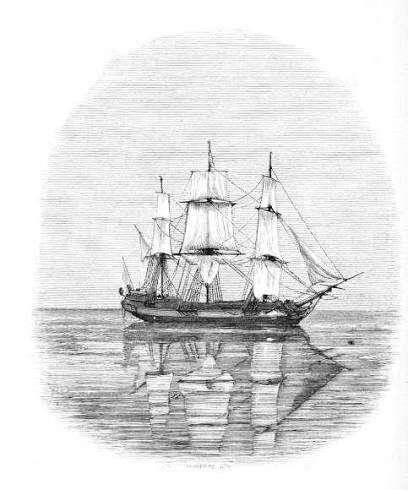 [Image credit: www.victorianweb.org]
Another striking image from the poem describes the vessel trapped in the motionless sea:
As idle as a painted ship
Upon a painted ocean.
Although this comparison is less commonly used as a fixed expression, its imagery remains instantly recognisable. A painted ship cannot sail, and a painted ocean cannot move. Together, they create a picture of complete stagnation.
The image captures those moments when life appears to have stopped: a project that refuses to progress, a difficult decision endlessly postponed, or the peculiar helplessness of waiting for circumstances to change.
Coleridge's genius lies in making the stillness almost tangible. The ship is designed for movement, yet it cannot move; the ocean should carry it forward, yet it offers no assistance. The natural world has become a stage on which human effort seems powerless.
It is a reminder that even our most vivid metaphors often originate in poetry that asks us to look more closely at familiar things.
Why Coleridge Still Speaks to Us
Samuel Taylor Coleridge did not set out to furnish the English language with expressions for professional embarrassment, everyday frustration or hard-earned wisdom. He set out to tell a strange and unsettling story about guilt, suffering, redemption and humanity's relationship with nature.
Yet The Rime of the Ancient Mariner continues to live beyond the page because its images are so deeply connected to recognisable human experiences. We carry burdens, encounter situations in which abundance offers no comfort, and emerge from difficult experiences changed.
That is the peculiar afterlife of great literature. A poem written in the eighteenth century can find its way into a conversation in the twenty-first, often without anyone noticing the journey it has made.
The next time you describe a problem as an albatross, complain that there is water everywhere but nothing to drink, or call someone sadder and wiser after a difficult experience, spare a thought for Coleridge. Somewhere behind those familiar words lies an ancient sailor, forever retelling his tale, and a poem that refuses to let us forget it.
After all, the best literature does not merely give us stories to read. It gives us language with which to understand our own lives.
Your next read: Pinned to the Wall: P.G. Wodehouse’s Clothesline Method of Writing