

Parent Categories


Related Products


Related Books
Pinned to the Wall: P.G. Wodehouse’s Clothesline Method of Writing
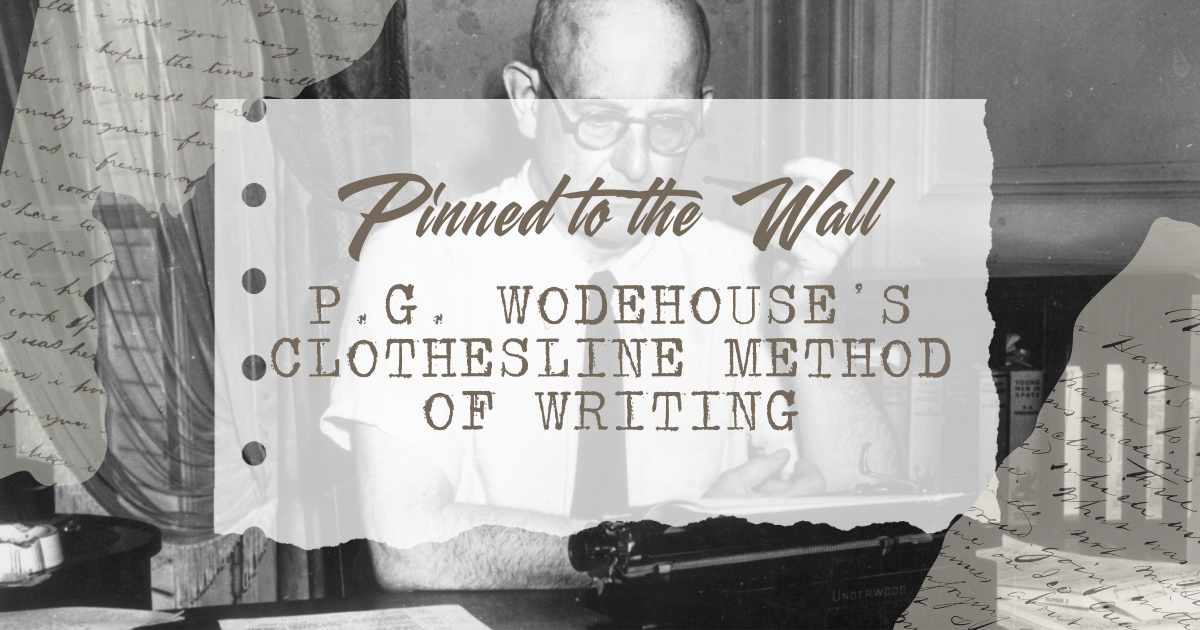 P.G. Wodehouse’s Clothesline Method of Writing
Imagine a writer’s room with a wall covered in scraps of paper. Each scrap contains a scene, a joke, a character’s predicament or a small but potentially significant detail. Nothing seems to connect at first glance. Yet, somewhere among these fragments lies the beginning of a story, its complications and perhaps even its perfectly timed punchline. This is the curious image associated with P.G. Wodehouse’s clothesline method of writing, a technique that offers a glimpse into the mind behind some of English literature’s most delightfully intricate comedies.
Best known for the adventures of Bertie Wooster and his unflappable valet Jeeves, Wodehouse was a master of comic timing, elaborate misunderstandings and plots that seemed to tie themselves into impossible knots before unravelling with astonishing ease. His prose feels effortless, almost as though the jokes arrived fully formed. But behind that apparent lightness lay an extraordinarily careful approach to constructing stories. The clothesline method offers an intriguing way to understand how a writer could make such complicated fiction appear so wonderfully spontaneous.
Also read: 6 Times Oscar Wilde Proved He Was Ahead of His Time
The Man Behind the Apparent Effortlessness
 [Image credit: www.wodehouse.org]
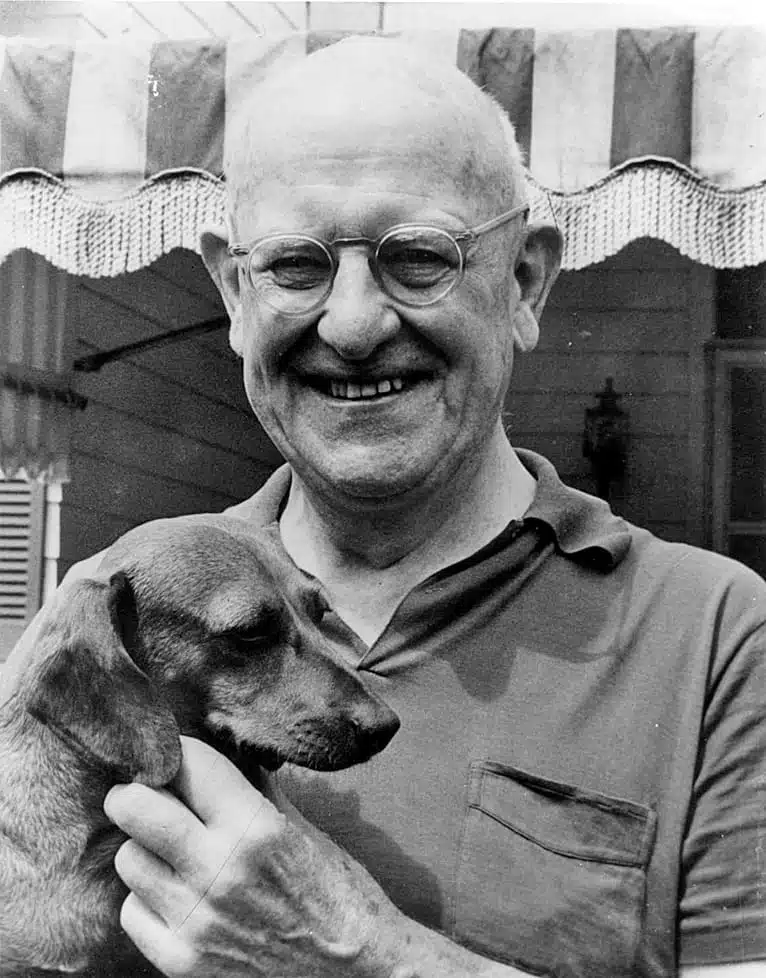
Born in 1881, Pelham Grenville Wodehouse, affectionately known as Plum, produced more than seventy novels, hundreds of short stories and numerous other works during a career that spanned decades. His fictional world was populated by aristocrats with baffling problems, formidable aunts, ambitious young men, scheming friends and servants whose intelligence far exceeded that of their employers. The Wodehouse Society celebrates the remarkable range and enduring appeal of this body of work.
What is particularly fascinating, however, is how much labour went into creating the illusion of ease. Wodehouse understood that comedy depends not merely on amusing sentences but on the precise arrangement of situations. A misplaced letter, an ill-timed arrival or a mistaken assumption can set an entire plot in motion. For the humour to work, each complication must arrive at just the right moment, preferably making the situation worse before anyone can make it better.
Wodehouse himself acknowledged the difficulty of plotting. He once remarked that working out plots took him an extraordinarily long time. Before writing the finished novel, he could prepare hundreds of pages of notes, mapping out the sequence of events before concentrating on individual characters' actions. The process could take months or even years.
This is where the clothesline becomes such a useful image. It reminds us that a successful comic novel is not simply a collection of funny episodes. It is a carefully arranged chain of cause and effect, with every scene contributing to the larger design.
Pinning the Story Together
 [Image credit: www.escritores.org]
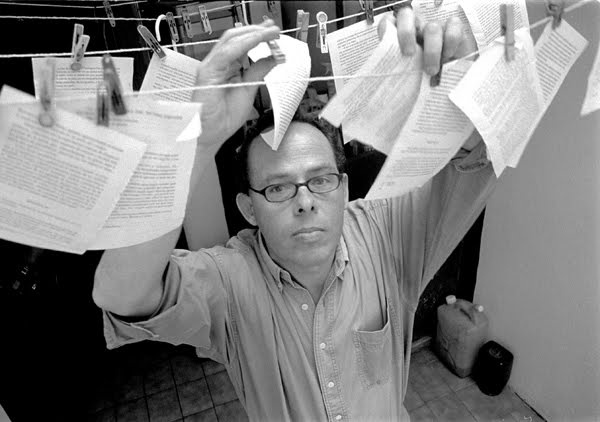
The clothesline method is associated with Wodehouse's painstaking approach to plotting. In accounts of his writing process, he is described as typing out sheets of plot and narrative ideas and hanging them up like laundry. He could then move individual pages up or down, rearrange them or examine how changing their positions affected the story.
Think of it as editing a novel before committing to its final form. Instead of being trapped by the order in which ideas first appeared, a writer can treat each scene as a separate piece of a larger puzzle. A conversation that seems funny but serves no purpose might need to be removed. A crucial revelation might work better earlier. A minor incident might become the perfect trigger for a much larger disaster.
For a Wodehouse novel, this flexibility was invaluable. His plots frequently depended on several characters pursuing incompatible goals, each misunderstanding the intentions of the others. A romantic complication might collide with a financial predicament, while an interfering relative introduced an entirely new obstacle. The resulting confusion had to feel natural, even when the machinery behind it was anything but simple.
The physical arrangement of pages made that machinery visible. Rather than relying on memory or hoping that inspiration would eventually resolve every difficulty, Wodehouse could inspect the architecture of his story. If a transition felt weak or a complication appeared unconvincing, he could experiment with the sequence until the pieces fitted.
The method also made revision less intimidating. A scene could be moved without dismantling the entire manuscript. A new idea could be inserted wherever it made the greatest difference. The clothesline, in effect, gave the writer permission to play with the plot before the prose became fixed.
Why Comedy Needs Such Careful Construction
 [Image credit: https://i.pinimg.com/originals/06/32/2d/06322d500e48bbdedfc808d330b8472e.jpg]
Comedy is often mistaken for a spontaneous art. We imagine the comic writer catching a funny thought, putting it on paper and moving merrily along. Wodehouse's process suggests something rather different: spontaneity can be engineered.
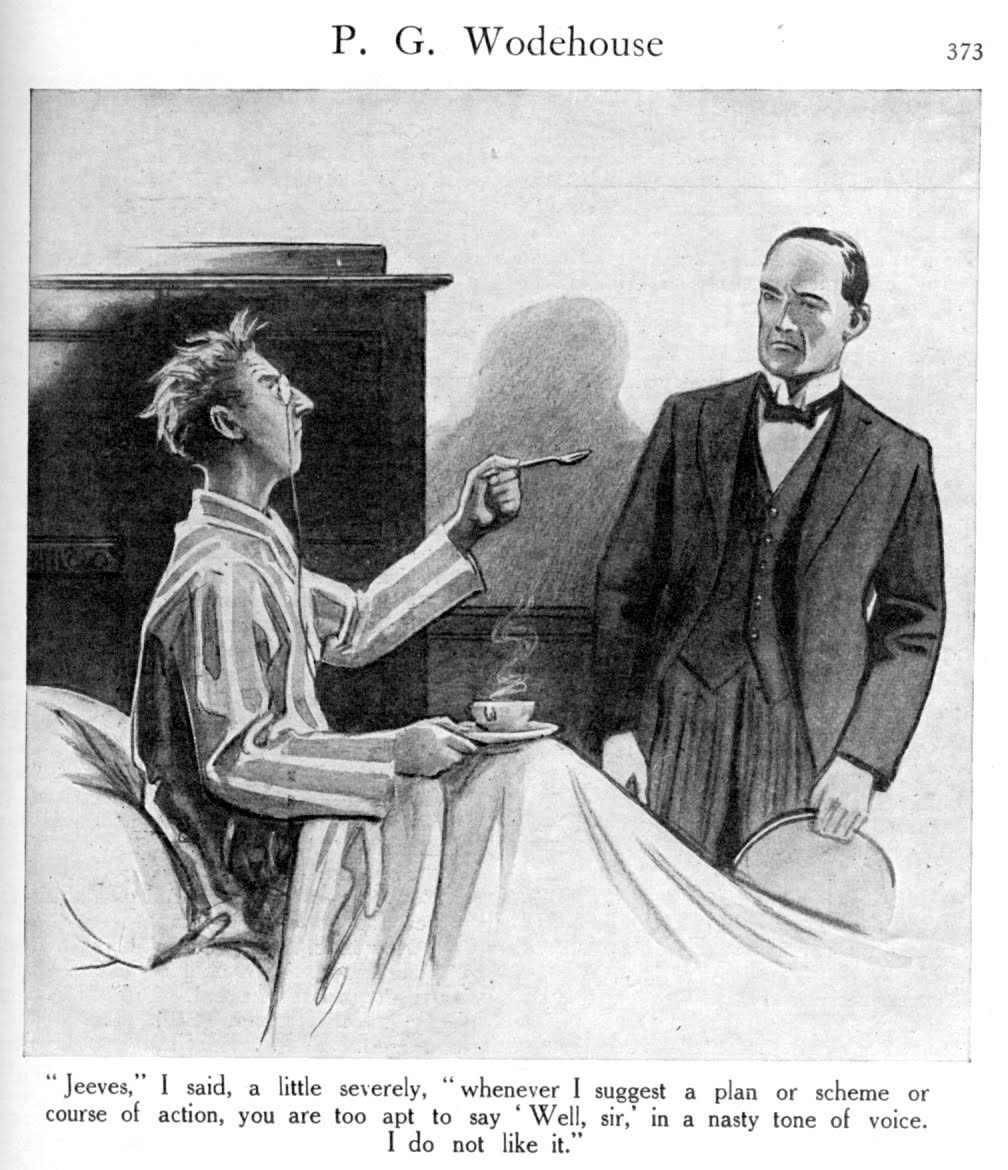
Consider Bertie Wooster's predicament in one of his many adventures. He might agree to help a friend, only to discover that the favour involves deceiving a relative, acquiring an inconvenient object or navigating a romantic misunderstanding. His attempts to escape the original difficulty create fresh ones, until Jeeves must step in with his customary composure and an ingenious solution.
For such a sequence to succeed, the reader must understand the circumstances, recognise the absurdity and anticipate the consequences without guessing every twist. A revelation must be surprising but not arbitrary. A joke must arrive at the right moment, and a resolution must feel both unexpected and inevitable.
Wodehouse's method helped him manage these demands. He reportedly worked out a detailed scenario before writing the novel itself, testing where scenes and comic situations would occur. In a 1975 interview, he explained the importance of dividing a humorous novel into scenes and keeping the material between them to a minimum.
The result was fiction that rarely felt laboured, despite the extensive labour behind it. His elaborate plots gave his language room to sparkle, while the language made the plots seem lighter than they were.
What Writers Can Learn from Wodehouse
The clothesline method remains an appealing lesson for writers because it separates two activities that can otherwise become tangled: inventing a story and telling it.
When drafting, writers often become attached to their first ideas. A scene may survive simply because it was enjoyable to write, even if it slows the narrative. A plot twist may remain in the wrong place because moving it seems too difficult. By laying out the story's essential moments separately, a writer can judge each one on its contribution rather than its history.
The technique also encourages patience. If a story refuses to come together, the answer is not necessarily to write faster or force the next chapter into existence. Sometimes the missing element is a scene, a convincing motivation or a better sequence of events. Looking at the whole structure can reveal what a writer cannot see while immersed in individual paragraphs.
Of course, the clothesline is not a guarantee of comic genius. No arrangement of paper can manufacture Wodehouse's extraordinary command of language, his gift for metaphor or his instinct for the ridiculous. But it can provide a framework within which those talents have room to flourish.
The Art of Making It Look Easy
Perhaps the greatest lesson of Wodehouse's clothesline method is that readers should never have to see the scaffolding holding a story together. They should be free to enjoy the spectacle, unaware of how carefully every piece has been positioned.
That is the peculiar magic of his fiction. Beneath the absurd predicaments and sparkling dialogue lies a writer who took immense trouble to make everything seem effortless. The pages might have been pinned to a wall, shifted, examined and rearranged, but the finished story arrives with the grace of a perfectly delivered punchline.
And perhaps that is why Wodehouse remains such a rewarding writer to revisit. He reminds us that literary lightness is not the absence of hard work. Often, it is the most convincing evidence of it.
Your next read: What Does Not Kill Me: What Friedrich Nietzsche Actually Meant