

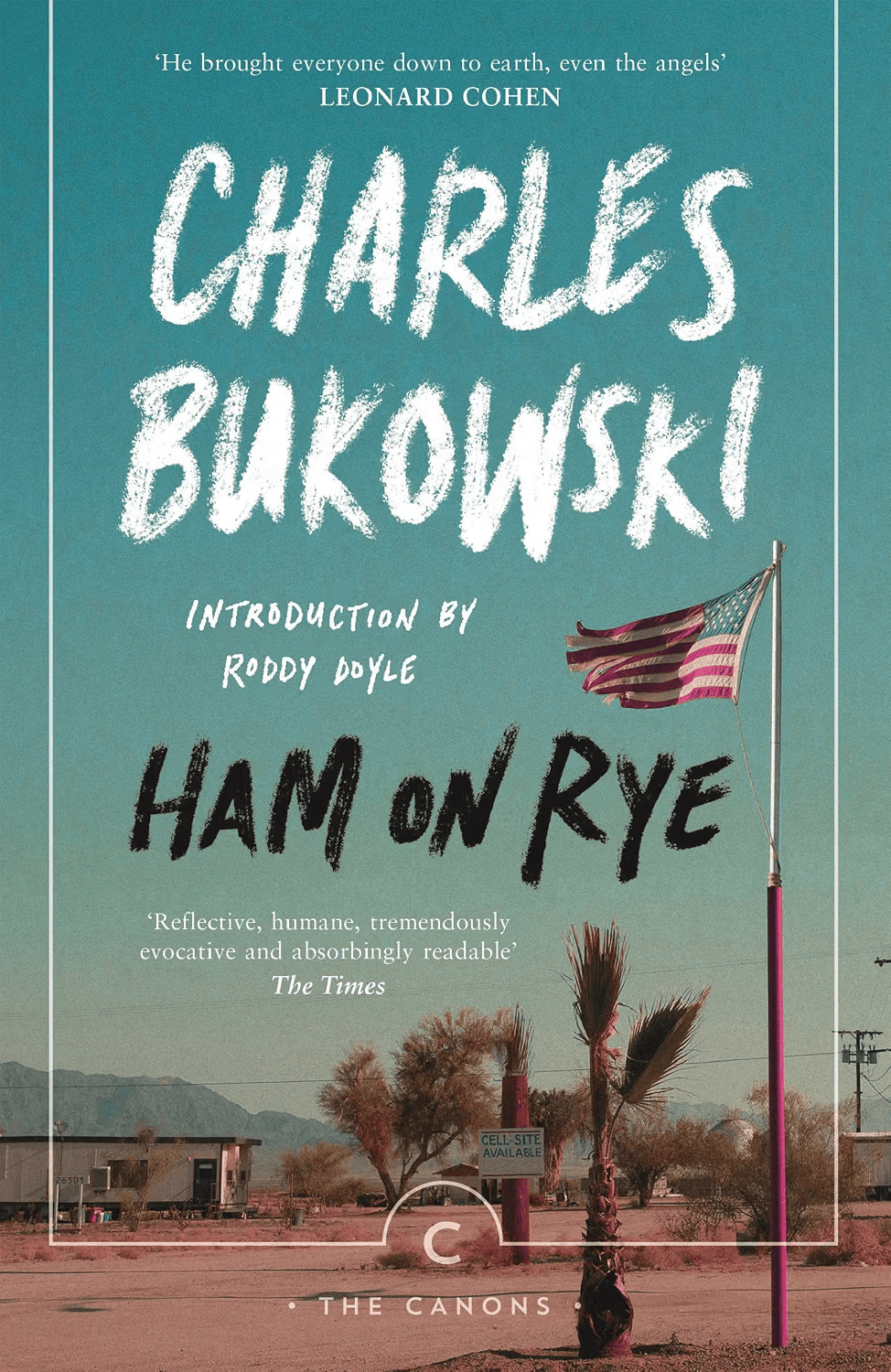
Ham On Rye
Ham on Rye by Charles Bukowski is a raw coming-of-age novel about loneliness, anger, poverty, and growing up on the margins of American society.
The story follows Henry Chinaski, Bukowski’s semi-autobiographical alter ego, through a difficult childhood and adolescence during the Great Depression. Raised by an abusive father and an emotionally distant family, Henry struggles with insecurity, violence, severe acne, social isolation, and a growing sense that he does not fit into the world around him.
As he moves through school, friendships, fights, first encounters with alcohol, and early experiences of desire, Henry develops the cynical, rebellious voice that would later define him. Rather than romanticising youth, the novel presents growing up as awkward, painful, funny, and often brutal.
At its heart, Ham on Rye explores alienation, masculinity, class, family abuse, self-destruction, and the search for identity. Bukowski’s direct and unsentimental style makes the book both darkly comic and deeply vulnerable.
It is a harsh but compelling portrait of a young outsider learning to survive by turning disappointment, humiliation, and anger into defiance.